Trending

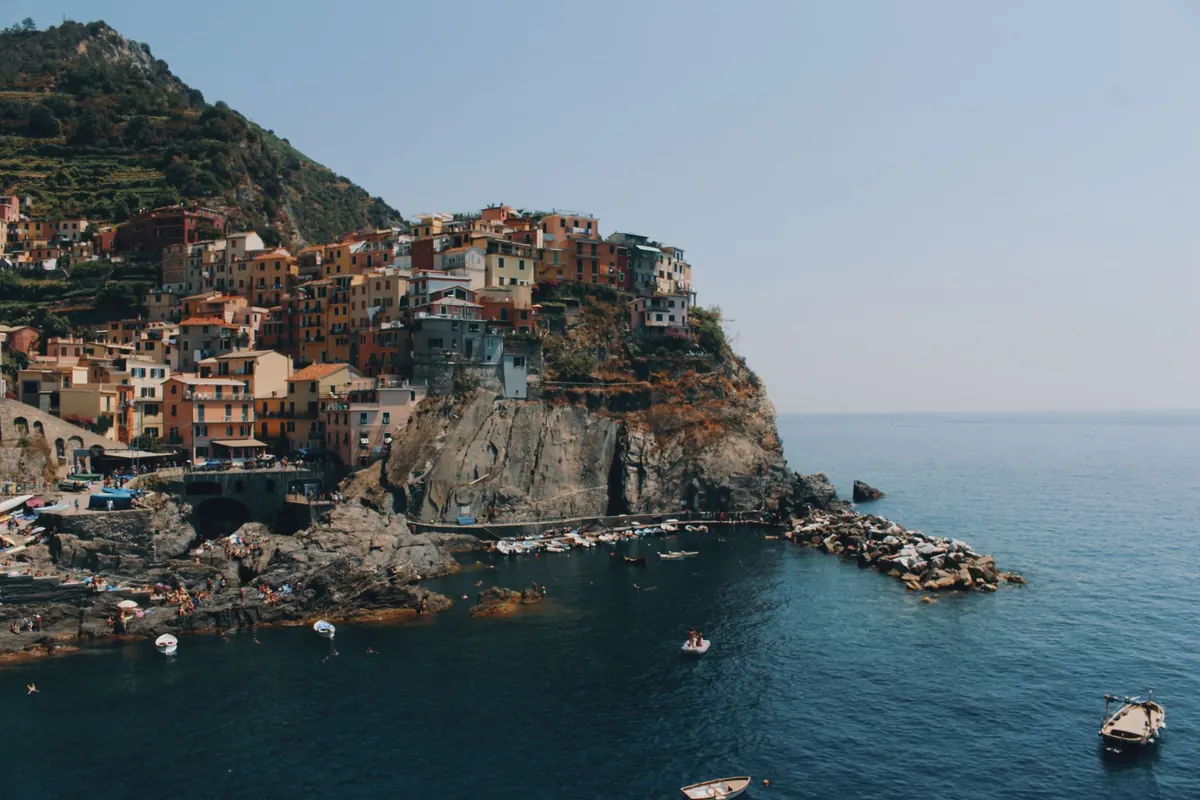
Spring and autumn are the two seasons when the Cinque Terre feels less like a set of viewpoints connected by a railway and more like a place where people actually live. Both sit either side of the summer crush. Both bring softer light and cheaper rooms. And both come with trade-offs you can plan around in an afternoon. The short version: spring wins on greenery and daylight, autumn wins on warm water, harvest cooking and elbow room. The longer version depends on how much walking you intend to do, and how much you mind carrying a rain jacket.
Spring arrives early on this stretch of Ligurian coast, but it arrives unevenly. March is a transition month — one day bright and mild enough for a T-shirt on a sheltered terrace, the next grey and damp with a wind that finds every gap in the sea wall. April is the gamble. May is usually the reward.
What you get for putting up with that uncertainty is the best-looking version of the terraces. The vines leaf out, the stone walls sprout wildflowers, and the hillsides above Vernazza and Manarola turn a green so vivid it looks slightly artificial in photographs. Mornings are quiet, the light lasts until well after eight in May, and the villages have that just-waking-up energy after the winter slowdown.
The sea, on the other hand, is cold. Swimming in April is for the committed; even late May is bracing. Pack a warm layer for evenings, because the temperature drops quickly once the sun leaves the hillside. And keep a flexible plan for one wet day — spring rain tends to arrive as showers rather than multi-day storms, but it does arrive.
September often feels like the best of summer without the worst of it. The sea has spent all season warming up, so swimming off Monterosso or the rocks below Riomaggiore is genuinely pleasant, and the light turns that soft gold that photographers chase. October is the transition: still mild, still mostly open, but with a growing chance of rain.
This is harvest time, and you notice it. Grapes come off the steep terraces to make Sciacchetrà, the local passito wine, and you'll see growers carrying crates down paths no machine could reach. Chestnuts and mushrooms appear on menus inland, olive oil is pressed, and Monterosso's anchovy festival typically lands in September. Restaurant cooking feels more rooted in the season than at any other point in the year.
November is the honest caveat. It's the quietest month and the wettest, some hotels and restaurants close for their seasonal break, and heavy rain can shut trails at short notice. Ligurian autumn downpours can be intense. If you come in November, come for empty villages and long lunches, not for a hiking holiday.
Neither season is empty. Spring has Easter, plus the Italian public holidays around 25 April and 1 May, when the villages fill with domestic visitors and weekend hikers. September still carries a late-summer buzz, especially on Saturdays.
The pattern that matters is daily rather than seasonal. Day-trippers arrive mid-morning and leave mid-afternoon, mostly from La Spezia, Levanto and cruise calls. Between roughly ten and four, the main streets of Vernazza and Manarola can feel like a queue with scenery attached. By six, they're yours. Staying overnight is the single best crowd strategy in either season — and it's easier to afford in October or March.
If your dates are fixed by work or school holidays, aim for a Tuesday to Thursday stay in late April or early October. You'll get most of the season's advantages with a fraction of the bottleneck.
This is the section worth reading twice, because it's where spring and autumn behave most differently.
The coastal path — the Sentiero Azzurro — is the famous one, and it requires the Cinque Terre Card, which also covers the local trains and buses. Sections close for maintenance and landslide risk throughout the year, and the Via dell'Amore between Riomaggiore and Manarola has a long history of closure and staged reopening. Never build an itinerary around a single stretch of trail. Check the national park's official information the day before you walk, not the week before.
In spring, the risk is mud and slippery stone after rain; the stepped sections between Corniglia and Vernazza are unforgiving in wet conditions. In autumn, early September heat is the issue, then wet steps and, from October onward, a higher chance of rain-driven closures. Higher routes — the sanctuary paths to Madonna di Reggio and San Bernardino, or the ridge walk toward Punta Mesco — are usually quieter and often open when the coast path isn't.
One seasonal bonus: the ferry service linking the villages generally runs from around April to October. In May you get it in full, in September and early October you get it without the peak-season crush.
Locals are back in their gardens, shutters are being repainted, and the bars have the slightly surprised air of places reopening after a slow winter. Easter processions in the villages are worth timing a trip around. On the plate: wild asparagus, artichokes, spring lamb, and pesto made with the season's first basil.
The rhythm is slower and more domestic. You'll see grapes drying on racks, hear the harvest talked about in the bar, and find menus leaning on porcini, squash and new oil. Evenings cool down enough to make a long dinner appealing. By late October some places start closing for the winter, so check opening days rather than assuming.
Book accommodation early for Easter, the late-April and early-May holiday weekends, and any September weekend — the good rooms in Vernazza and Manarola go first. October and March are far more forgiving.
Pack for two climates in either season: a light waterproof with a hood, a warm mid-layer, and shoes with real grip. The cobbles and trail steps are polished smooth and get treacherous when wet. Don't attempt the coast path in sandals, and stay off exposed trails during thunderstorms.
Buy the Cinque Terre Card at the park information points or online, and keep it with you on the trains; inspectors do check. Base yourself in one village rather than moving hotels every night — the trains are quick, and unpacking once beats hauling a suitcase up a stairway three times. Levanto and La Spezia work well as cheaper bases if you want more space and easier parking.
Finally, treat the weather as part of the plan rather than an interruption to it. Have a wet-day list ready — the anchovy salt works at Monterosso, a long lunch in Corniglia, the church of San Giovanni Battista in Riomaggiore — and you'll find that either season gives you the coast at close to its best. And if you're travelling with mobility limitations or a health condition that affects walking, check trail gradients and lift access in Corniglia in advance, and speak to a qualified professional about what's sensible for you.
Photo: 臻 宋 / Pexels