Trending

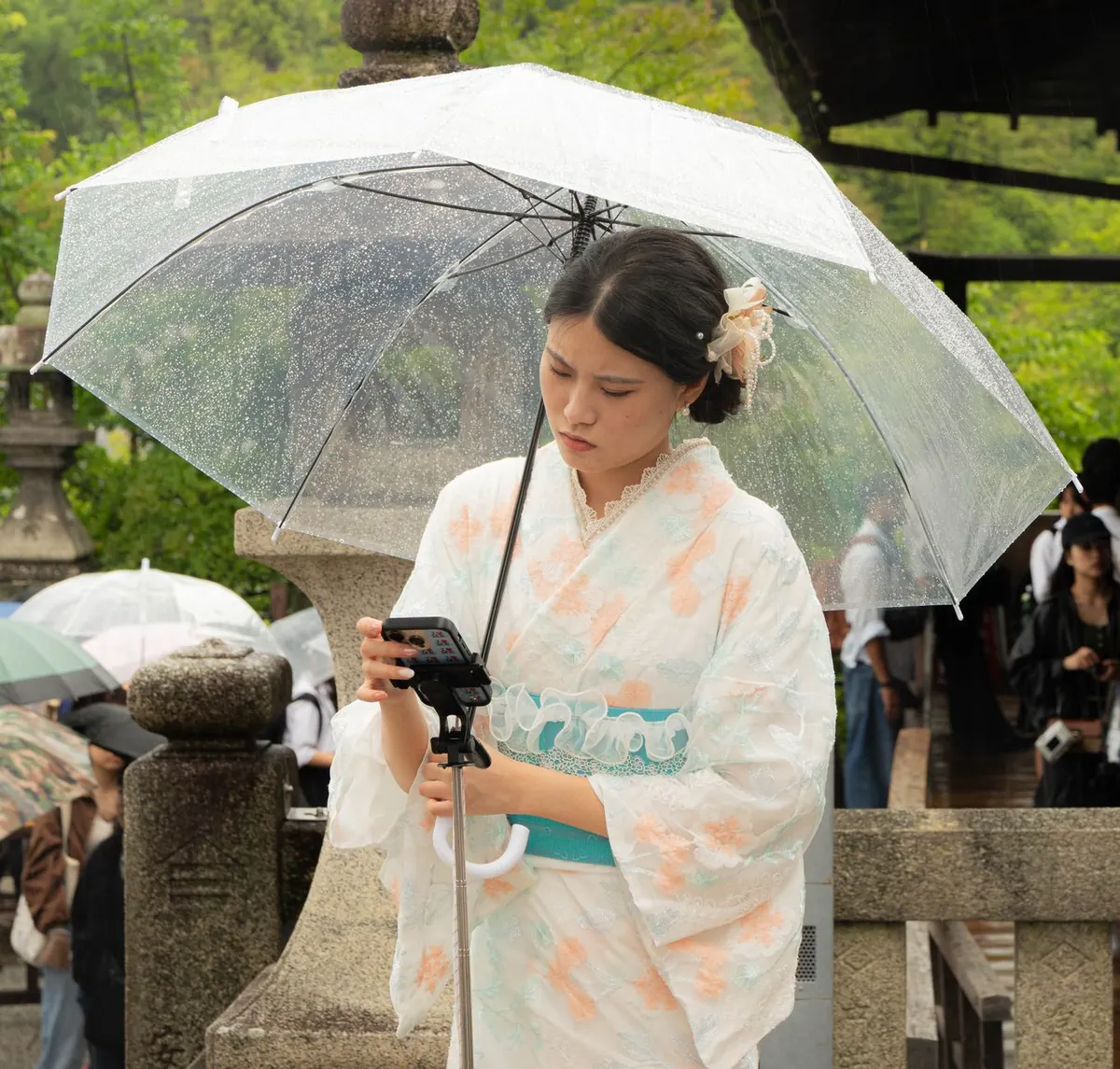
Kyoto in tsuyu—the rainy season that usually runs from early June to mid-July—is less about dodging puddles and more about adjusting your pace. The city looks different when wet: temple gardens darken, stone paths shine, and the covered arcades fill with locals doing their errands. You can still have a full day. The trick is to choose places where the rain becomes part of the atmosphere rather than an obstacle, and to keep a flexible plan with one indoor anchor in the morning and another in the afternoon.
Begin under the long roof of Nishiki Market, a narrow covered street in central Kyoto that runs roughly 400 meters from Teramachi to Takakura. It is the kind of place that works in any weather: pickle shops, tofu sellers, knife stores, and small counters offering tamagoyaki and yuba. Arrive before mid-morning if you want room to browse; by lunchtime the aisle can feel like a slow-moving train. Eating while walking is discouraged in many sections, so eat at the stall or step aside rather than juggling skewers and an umbrella.
When you finish, turn north into Teramachi and Shinkyogoku, two covered shopping arcades that connect Shijo and Sanjo. They are not ancient sights, but they are useful rain corridors. You can walk from one end of downtown to the other without opening an umbrella, stopping for coffee, stationery, or a bowl of noodles when the weather turns heavy. Treat the arcades as your dry route, not just a shopping stop.
Sanjusangendo is a single long hall, about 120 meters from end to end, and it houses 1,001 statues of Kannon, the bodhisattva of compassion. The building is entirely indoors, dim and quiet, with rows of gilded figures that seem to multiply as your eyes adjust. On a wet day the effect is especially strong: the rain drums on the roof, visitors speak in low voices, and the outside world feels far away.
Photography is not allowed inside the hall, so leave your phone in your pocket and let the scale of the place settle on you. Check opening hours before you go, and combine the visit with the Kyoto National Museum nearby if you want to stay dry for another hour or two.
Nijo Castle’s Ninomaru Palace is a sequence of rooms linked by covered corridors, with sliding doors, painted screens, and the famous “nightingale” floors that chirp underfoot. You leave your shoes at the entrance and walk in socks, which makes the whole route feel hushed and slightly ceremonial. The palace is indoors, but the gardens are visible from the verandas; on a rainy day the moss and maples look saturated and close.
This is a good stop for travelers who want a major sight without standing in the open. Check the castle’s closure calendar—like many Kyoto sites, it has maintenance days and seasonal hours—and go early or late to avoid school groups. The covered corridors also make it a sensible choice if you are traveling with children or anyone who tires easily.
The Kyoto National Museum in Higashiyama is a straightforward rainy-day answer: large, indoor, and close to Sanjusangendo. Its permanent collection and special exhibitions cover Buddhist sculpture, painting, ceramics, textiles, and calligraphy, so you can spend an hour or half a day depending on your energy. The building itself is spacious enough that a wet crowd does not feel oppressive.
Check the museum’s opening days before setting out; many Kyoto museums close on Mondays, and special exhibitions have their own schedules. If you are building a wet-weather route, pair the museum with Sanjusangendo in the morning and leave the afternoon open for tea or shopping.
A tea ceremony is indoor by design, and rain makes it feel more natural. Look for a tea room in Gion, near Kennin-ji, or in the Nishijin district, and book ahead if you are visiting on a weekend or during a holiday period. You do not need deep knowledge of tea to enjoy it; a good host will guide you through the steps without turning the hour into a lecture.
Wear socks, avoid strong perfume, and follow your host’s lead on when to bow, turn the bowl, and drink. If kneeling on tatami is uncomfortable, ask in advance whether a chair can be arranged. The point is not to perform perfectly. It is to sit still, listen to the water, and let the rain outside become part of the room.
In the Nishijin weaving district, the Kyoto Museum of Crafts and Design (Fureaikan) is a quiet indoor stop devoted to the city’s traditional crafts: Nishijin textiles, ceramics, lacquerware, bamboo work, and more. It is smaller than the national museum, which makes it easy to fit into a wet afternoon without museum fatigue. The displays also give context to the shops you may pass later in the arcades.
Check opening days before you go, since some city-run museums keep irregular hours. If you are interested in textiles, this is a sensible companion to a walk through Nishijin’s backstreets—just save the street walk for a break in the rain and keep the museum as your dry base.
Kyoto Station is more than a transit hub. The station building, the Isetan department store, and the Porta underground mall are all connected and covered, so you can eat, shop, and pick up supplies without stepping into the rain. Ramen Koji on the station’s upper floors is a convenient lunch stop, and the underground passages are useful when you need to move between the station and nearby streets.
This is not the Kyoto of temples and gardens, but it is practical. Use the station on your arrival or departure day, or as a backup when the rain is too heavy for a long walk. It is also a good place to buy a sturdy umbrella, a towel, or a plastic bag for wet clothes—small things that make the rest of the day easier.
Kyoto’s rainy season is not a washout. It is a different city: softer, quieter, and more inclined to send you indoors. Build your day around one covered market or arcade, one indoor temple or museum, and one warm pause for tea or noodles. Keep the rest loose.
Start early, stay flexible, and let the weather set the pace. A wet Kyoto
Photo: Bernard MUSICANT / Pexels