Trending

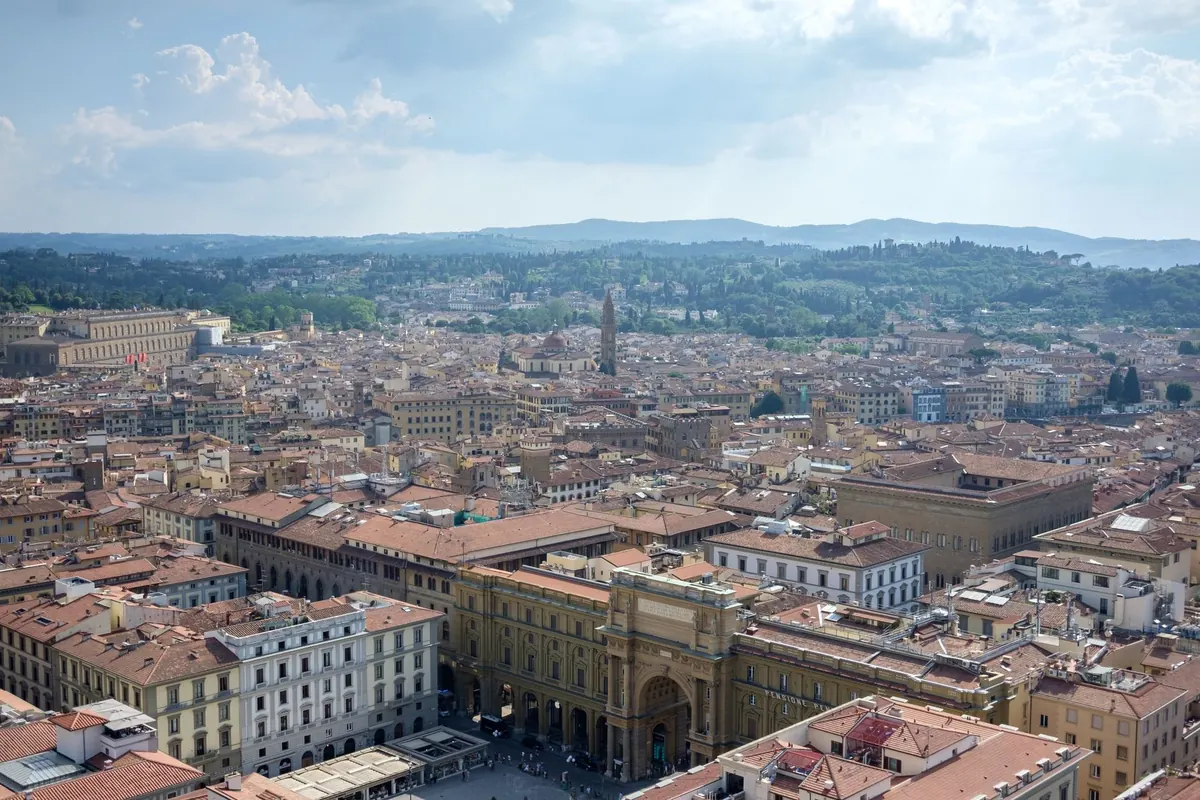
Florence rewards the walker more than the queuer. The city's best moments usually happen between the sights: the first light on Piazza della Signoria, the clatter of a scooter in a side street, the smell of espresso from a bar with no sign in English, the sudden view of the Arno when a narrow lane opens up. This two-day plan is built around that idea. It keeps you moving through neighborhoods, uses early starts and late walks to avoid the worst crowds, and treats the blockbuster museums as optional rather than mandatory. You will still see Renaissance Florence, but you will see it from piazzas, church façades, bridges, gardens, and tables instead of from the back of a ticket line.
The itinerary assumes two full days and a comfortable pair of shoes. It does not require timed-entry anxiety, and it does not depend on securing the most famous museum reservations months in advance. If you want one art fix, choose a smaller museum or a first-slot booking and treat it as a single exception. Otherwise, let the city be the exhibition.
Florence is compact, but its crowds concentrate in a few predictable places at a few predictable times. The Uffizi and Accademia draw long lines; the Duomo complex draws security queues; the Ponte Vecchio becomes a slow-moving river of shoppers by mid-morning. This plan works by flipping the schedule. You visit the famous exterior spaces before the tour groups arrive, eat lunch after the first rush, and save the Oltrarno for the hours when day-trippers are heading back to their hotels or trains.
The best Florence itinerary is not a checklist. It is a loop through light, stone, coffee, and views, with enough space to stop when something catches your eye.
Begin at Piazza della Signoria while the square is still being swept. The Palazzo Vecchio stands over the open space like a stern host, and the copy of Michelangelo's David outside is best seen before the crowd poses around it. Walk through the Uffizi courtyard, which is free and open to the public, and look up at the painted ceilings and the ranks of stone figures along the colonnade. You are not going inside the galleries; you are enjoying one of Florence's great architectural rooms without a ticket.
Cross to the Arno and stand on the edge of Ponte Vecchio before the jewelers open. The bridge is at its most photographic when the light is soft and the windows are still shuttered. Continue along the river toward Santa Croce, but do not rush. This is the hour for empty streets and quiet corners.
You do not need to climb the dome to appreciate Florence's cathedral. Walk around the Duomo complex from the outside, studying the green and pink marble of Santa Maria del Fiore, the bronze doors of the Baptistery, and Giotto's Campanile. If you want to enter a church, choose a quieter one nearby rather than joining the main cathedral queue. Or simply sit in Piazza del Duomo with a coffee and watch the city wake up.
For a queue-free alternative, head to the Church of Santa Maria Novella or the Basilica of San Lorenzo later in the day. Their façades and interiors offer serious art and history with far less friction. The point is not to avoid beauty; it is to avoid spending your morning in a line.
Wander north through the streets around San Lorenzo, where the Medici family shaped much of the city's political and artistic life. The San Lorenzo market is busy, but it is a good place to graze rather than sit down. Buy a piece of schiacciata, a few olives, or a small bag of cantucci, and eat standing up or in a nearby square. This is also a good moment to notice the leather workshops and small food shops that survive beside the tourist stalls.
By now the main squares are filling up. Walk ten minutes away from the Duomo and choose a trattoria on a side street. Look for a short menu, a few locals, and a chalkboard rather than a laminated photo menu. Order a simple primo, a plate of vegetables, and a glass of house wine. Florence is not a city that rewards rushing lunch; it rewards sitting still while the neighborhood moves around you.
After lunch, cross toward Santa Croce. The basilica is often busy, but the piazza in front is a fine place to rest and watch the city. If the line is short, step inside for the tombs and frescoes; if not, keep walking. Follow the river east and then loop back through the streets toward the water. The Arno is Florence's best free promenade, and the light changes constantly.
Return to the Ponte Vecchio in the late afternoon, when the jewelry shops glow and the crowds begin to thin. Cross into Oltrarno, the left bank, and walk through the streets around Santo Spirito. This is a neighborhood of workshops, small bars, and lived-in squares. It feels less like a stage set than the center does, and it is where many travelers wish they had spent more time.
Have an aperitivo in Piazza Santo Spirito, then dinner at a trattoria nearby. Reserve ahead if you have a specific place in mind, but many good options accept walk-ins if you arrive early. After dinner, walk back toward the river for a final glimpse of the illuminated bridges. The city is quieter now, and the day's crowds have finally dissolved.
Start on the left bank again, this time at Piazza del Carmine. The Brancacci Chapel is nearby, but it requires a timed booking and can still involve waiting. If you want a single art stop, book the first slot and go straight in; otherwise, use the morning to explore the streets around Santo Spirito and San Frediano. These are some of the best walking streets in Florence, full of bakeries, artisans, and ordinary morning life.
Visit the Basilica of Santo Spirito, a Renaissance church with a calm interior and a much gentler entry experience than the major museums. Then wander through Via dei Serragli and the surrounding lanes. Look for workshops restoring furniture, making shoes, or framing pictures. This is a good time to buy a small craft object rather than a souvenir that could have come from anywhere.
Walk east along the river to the San Niccolò neighborhood, then climb gently toward the Rose Garden. The garden is free, quiet, and offers one of the best views of the city without a ticket booth. In spring and early summer, the roses are a bonus; in other seasons, the terrace and the perspective are enough. Continue uphill to Piazzale Michelangelo, but do not expect solitude. Even so, the view is worth seeing once.
Come back down into the neighborhood for lunch. Choose a place away from the piazzale's view-driven restaurants, where you are paying for the panorama rather than the food. A bowl of ribollita, a plate of pasta, or a simple panino will do. Then take a slow coffee and plan the rest of the afternoon without trying to fit in too much.
The Bardini Gardens are a quieter alternative to the Boboli Gardens and often involve a shorter entry process. The terraces, stairways, and views are beautiful, and the garden gives you a different angle on the city. Afterward, walk to Piazzale Michelangelo for the classic panorama. If it is crowded, step to the side and look beyond the selfie takers; the city is still there.
Continue uphill to San Miniato al Monte, one of Florence's oldest and most beautiful churches. The façade is striking, the interior is serene, and the view from the steps is even better than the one from the piazzale. Check the closing time before you go, and dress respectfully. This is a working religious site, not a museum, and that is part of its power.
Stay for sunset if the weather cooperates, then walk back down through San Niccolò. The descent is easier than the climb and gives you one last look at the river. Stop for a drink on a side street before dinner. You have earned it.
For your final meal, return to a neighborhood you liked rather than chasing a famous name. Florence is full of excellent trattorias, wine bars, and osterias that do not require a queue if you book sensibly or eat a little earlier. End the night with a walk across the Arno and through the smaller streets near Santa Croce or the Duomo. The monuments are lit, the crowds are gone, and the city feels like it belongs to the people who are still walking.
Florence's most famous food experiences often come with a line. You can avoid most of that by adjusting your timing and your expectations. Eat lunch at 12:30 rather than 1:30, book dinner for 7:30 rather than 8:30, and choose places with small menus and local regulars. The goal is not to find the "best" restaurant in a guidebook; it is to find a good table without wasting an hour of your two days.
The key to a queue-free Florence is not secret knowledge; it is timing, geography, and a little restraint. You do not need to see everything. You need to see enough, well, without spending your trip in transit or in line.
In the end, the best way to see Florence in 48 hours is to accept that you cannot see it all. Walk slowly, start early, eat well, and let the city's between-sights moments do the work. The queues will still be there for the people who want them. You will be somewhere else, turning a corner into a quiet street, which is exactly where Florence is at its best.
Photo: Mayumi Maciel / Pexels